Coffee
Types of Coffee Beans Explained Arabica, Robusta, Flavor Profiles, and Brewing Differences
Author:sana
|
Released:May 2, 2026
When it comes to savoring a delightful cup of coffee, grasping the variety of coffee beans available is vital. The four primary types—Arabica, Robusta, Liberica, and Excelsa—each boast distinctive flavors and characteristics that greatly influence taste, pricing, and availability. Arabica beans are known for their smooth and complex flavor profiles, while Robusta beans provide a stronger, earthier taste amplified by higher caffeine levels. The rarer Liberica and Excelsa beans add unique floral and fruity notes, ideal for those with adventurous palates. By delving into these variations, coffee lovers can make informed decisions tailored to their brewing preferences, thereby enhancing their overall coffee experience.
1. Classification Map of Coffee Beans
Coffee beans are primarily classified into two key species: Coffea arabica and Coffea canephora (commonly referred to as Robusta). Arabica beans tend to be sweeter and more delicate, whereas Robusta beans are characterized by their stronger and more bitter profiles. Within these species, numerous varieties emerge, often cultivated in specific regions, reflecting the beans' origins and unique flavor profiles.
In addition to species and varieties, the processing methods significantly influence the final flavor. Common techniques—washed, natural, and honey processing—each impart distinct characteristics to the beans. Finally, the roast level plays a significant role in classification; beans may be light, medium, or dark roasted, resulting in considerable alterations to taste and aroma. Familiarity with these factors—species, varieties, processing methods, and roast levels—empowers coffee enthusiasts to make selections that match personal preferences and brewing styles.
2. Coffee Species and Their Characteristics
At the forefront of coffee production are the two main species: Coffea arabica and Coffea canephora (known as Robusta). C. arabica is renowned for its nuanced flavor profiles and rich aroma, typically originating from the high-altitude regions of Ethiopia and the Arabian Peninsula. In contrast, C. canephora thrives in lower-altitude environments and is predominantly grown in Southeast Asia and Africa, where it delivers a bolder, more robust taste paired with elevated caffeine content.
Moreover, various geographical factors, climatic conditions, soil quality, and cultivation practices contribute to the emergence of distinct varieties. Notable varieties of C. arabica, such as Bourbon and Typica, demonstrate unique flavor characteristics shaped by their specific growth environments.
Processing methods, whether washed or natural, also significantly alter coffee flavor. Washed coffees yield brighter, cleaner flavors, while natural coffees present fruitier, heavier profiles that appeal to certain palates. The economics of coffee production mean variety availability is often dictated by market demands and climate shifts. Recognizing these details is crucial for coffee enthusiasts to select beans that resonate with their individual taste profiles and brewing techniques.
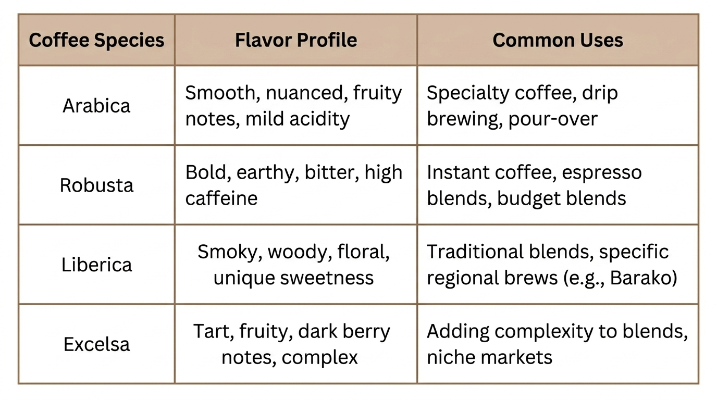
3. Comparison Table of Coffee Species
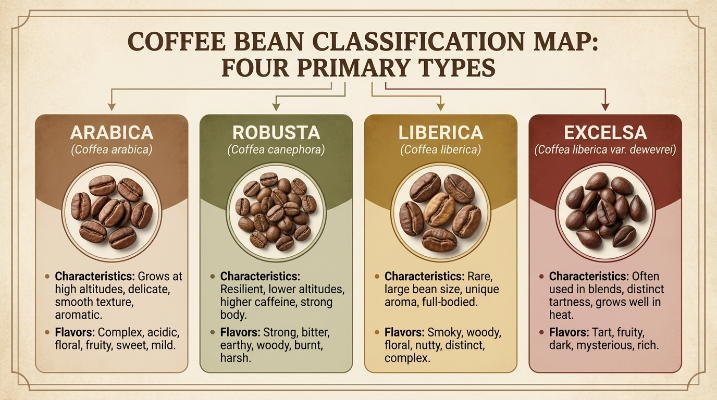
4. Arabica Coffee Beans
Arabica coffee beans thrive in high-altitude regions, celebrated for their smoothness and aromatic qualities that distinguish them from Robusta beans. Typically, these beans present a complex flavor profile characterized by delicate sweetness, fruity nuances, and hints of floral notes. Coffee lovers appreciate the vibrant acidity and clean finish, making Arabica their preferred choice.
However, cultivating Arabica beans presents challenges, including vulnerability to diseases and pests, as well as a requirement for specific climate conditions—cool temperatures coupled with ample rainfall. These factors lead to a more labor-intensive cultivation process, resulting in higher retail prices.
The versatility of Arabica beans contributes to their popularity; they are frequently used in specialty coffees, espresso blends, and cold brew preparations. Consequently, Arabica dominates the global coffee market, accounting for approximately 60-70% of total production, solidifying its status as the go-to option for discerning coffee lovers seeking quality and flavor.
5. Coffea Canephora (Robusta)
Coffea Canephora, commonly recognized as Robusta, stands apart from its more celebrated cousin, Arabica, due to several defining characteristics. First and foremost, Robusta beans are known for their stronger flavor profile, which often includes earthy and nutty undertones—making them popular for espresso blends. With nearly double the caffeine content of Arabica, Robusta’s increased caffeine concentration not only brings a distinctive bitterness but also serves to deter pests, resulting in reduced cultivation costs.
Robusta flourishes in low-altitude environments where temperatures are higher, and it exhibits greater resilience against diseases and climate fluctuations, contrasting with the climate preferences of Arabica. This durability, combined with its adaptability, translates to a more affordable presence in the coffee market. Ultimately, while Robusta may not boast the nuanced flavors of Arabica, its bold character provides a unique alternative for coffee enthusiasts who prefer a more intense brew.
6. Lesser-Known Species: Liberica and Excelsa
While Arabica and Robusta frequently dominate the coffee scene, Liberica and Excelsa present unique flavors that entice adventurous coffee drinkers. Liberica boasts distinct woody and floral notes complemented by a fruity aroma reminiscent of jasmine, and its lower acidity caters to those seeking a gentler brew. Though less common, Liberica is primarily cultivated in West Africa and select Asian regions, making it a rare delight in global markets.
Excelsa, once categorized as its own species, is now acknowledged as a varietal of Liberica, showcasing complexity while maintaining its individual identity. Notably, Excelsa coffee is characterized by its dark, fruity taste, often featuring hints of chocolate and tartness, providing a refreshing twist in blends. The rising interest among specialty coffee roasters is gradually increasing Excelsa's availability, though it still remains relatively scarce in mainstream offerings.
7. How Processing and Roasting Influence Flavor
The journey of coffee from seed to cup entails various processing and roasting methods, each imparting unique contributions to the final flavor profile. Coffee processing essentially involves transforming coffee cherries into green beans. The two prevailing methods—washed (or wet) and natural (or dry)—significantly reshape the flavor experience. Washed coffees typically exhibit cleaner, brighter acidity, showcasing the bean's intrinsic characteristics, while natural processed coffees often present deeper, fruitier flavors that emerge from prolonged fermentation of the cherry's mucilage.
The roasting process adds layer of complexity. Light roasts maintain the bean's natural acidity and fruity essence, emphasizing floral or citrus notes. Medium roasts create a balance between sweetness and acidity, introducing caramelized sugars for a rounded taste. Conversely, dark roasts present bold and rich flavors, emphasizing deep roasted qualities and often overshadowing acidity with hints of bitter chocolate or smoky undertones. Collectively, the choice of processing method and roasting levels affords a diverse tasting palette, enabling coffee enthusiasts to embark on a flavorful exploration that showcases skillful preparation and unique regional traits.
8. Choosing Coffee Beans by Taste and Brew Method
Selecting the right coffee beans hinges on understanding both personal taste preferences and the preferred brewing technique. Begin by scrutinizing labels for flavor notes that usually describe the coffee's taste profile; for example, Ethiopian beans may depict fruity or floral notes, while Colombian beans often feature caramel and nutty undertones.
If you appreciate a bold and robust cup, seek out dark roasts such as French or Italian, known for yielding rich chocolate or smoky flavors. These types are superb for brewing methods like espresso, which rely on finely grounded coffee to achieve a concentrated flavor. Alternatively, if your preference leans towards lighter, more delicate cups, lightly roasted beans—often fruity, acidic, and floral—are best for preparation methods like pour-over or siphon brewing, allowing their intricate flavors to shine.
Additionally, consider your brewing method: the French press works beautifully with coarsely ground coffee, enhancing rich, full-bodied flavors, while drip coffee makers often excel with mid-range grinds that balance acidity and sweetness. Aligning your chosen beans with the appropriate brewing method not only guarantees a delightful experience but also amplifies flavor profiles for your ideal cup of coffee.
Savoring the Variety of Coffee Experiences
Ultimately, the distinct species, origins, processing methods, and roasting levels of coffee beans play essential roles in shaping our choices and the flavors we encounter in each cup. By understanding these elements, coffee drinkers can effectively tailor their selections to align with personal preferences. We encourage readers to explore an array of coffees sourced from diverse regions and roast profiles to discover what resonates most with their palate. Embracing various brewing techniques and remaining open to new flavors will enhance your coffee experience, deepening your appreciation for this cherished beverage.
Practical Label-Reading Checklist
- Species: Identify Arabica or Robusta; Arabica tends to offer smoother flavors, while Robusta is bolder.
- Origin: Check the specific region (e.g., Colombia, Ethiopia) for insights into flavor profiles and quality.
- Process: Determine whether the beans are washed, natural, or honey-processed for understanding taste variations.
- Roast Level: Pay attention to light, medium, or dark roasts; light retains more acidity, while dark offers a richer, bolder flavor.
You May Like
-

-
Coffee
Can Pregnant Women Drink Coffee A Complete Guide to Caffeine Consumption During Pregnancy
-
Coffee
How To Maintain Coffee Grinders For Long Life and Consistent Performance
-
Guide
Stop Wasting Beans: The Barista Guide to Dialing in Espresso Fast
-
Guide
Save Time & Money: The Ultimate Guide To Perfect Drip Coffee Every Day
-
Guide
The Best Mocktails for Every Occasion (No Alcohol Needed!)