Coffee
How to Brew Coffee Without a Coffee Maker 7 Easy Methods at Home
Author:sana
|
Released:May 13, 2026
Are you eager to elevate your coffee brewing game without relying on a conventional coffee maker? One reliable method to achieve an exquisite cup without traditional equipment is the jar immersion technique. This steep-and-strain method allows you to immerse coffee grounds in water, with a starting ratio of one part coffee to fifteen parts water (1:15 ratio). Let the mixture steep for about four minutes to extract a rich flavor before straining it into your favorite mug. This approach not only highlights the significance of brewing techniques but also encourages coffee enthusiasts to explore and discover delightful ways to enjoy their favorite beverage, irrespective of equipment limitations.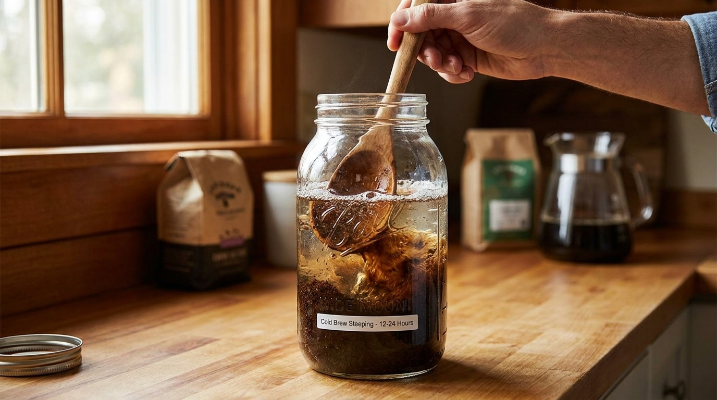
Coffee Brewing Basics: Water, Grind Size, and Ratios
A coffee maker is a specialized appliance crafted to brew coffee swiftly and efficiently, automating the process of hot water heating and coffee grounds steeping for daily convenience. Nevertheless, if you find yourself without a coffee maker, a kettle or a saucepan can serve as effective alternatives for boiling water. These options provide you with the flexibility to control the water temperature, a vital factor for extracting the best flavors from your coffee.
Understanding coffee-to-water ratios is crucial in crafting the perfect brew. A common ratio is 1 to 15, indicating one part coffee to fifteen parts water for a robust flavor. For those who prefer a milder cup, ratios of 1 to 17 or 1 to 20 are often recommended. Tweaking this ratio has a substantial impact on the coffee's flavor profile, offering a personalized brewing experience tailored to individual tastes.
Safety is essential when handling hot water or kitchen equipment. Always employ heat-resistant gloves or pot holders and maintain a stable environment to prevent spills or burns. Observing these basic safety principles ensures that your coffee brewing adventure is enjoyable and, more importantly, safe.
Comparing Coffee Brewing Methods Without a Coffee Maker
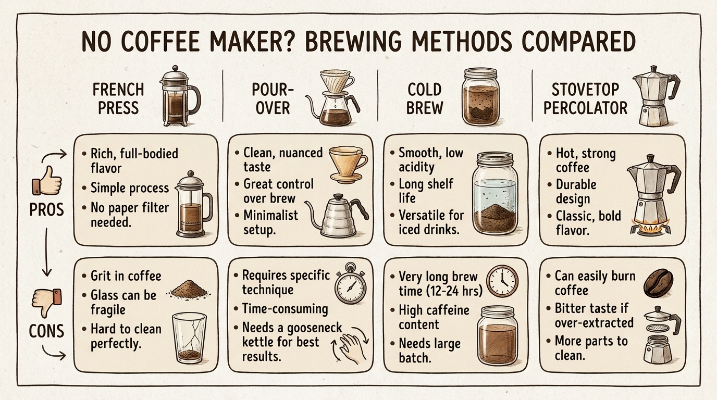
For coffee aficionados looking to break free from traditional brewers, various methods offer exciting alternatives to crafting your perfect cup. Each approach, varying from simple techniques to more intricate methods, caters to a wide array of preferences and skill levels. Here's a brief overview of popular methods:
- French Press: Known for producing a rich, full-bodied brew, the French press method uses coarsely ground coffee and hot water. Pros: Simple with robust flavors. Cons: Requires an extra step of pressing the grounds, which may not suit all users.
- Pour-Over: This technique involves manually pouring hot water over coffee grounds. Pros: Offers precise control over brew strength; Cons: Can be a time-consuming process requiring patience.
- Cold Brew: Brewed using cold water over an extended period, cold brew coffee delivers a smooth, low-acidity cup. Pros: Refreshingly low acidity; Cons: Needs a minimum of 12 hours to brew.
- Stovetop Percolator: A classic method in which boiling water is cycled through coffee grounds. Pros: Rich flavor; Cons: Requires meticulous temperature management to avoid over-extraction.
These methods encompass a wide spectrum from straightforward solutions to engaging processes. A detailed comparison table will illuminate the pros and cons of each technique, guiding you to discover whichever best suits your coffee journey.
How to Make Cowboy Coffee or Brew Coffee in a Saucepan
Brewing coffee using the saucepan or cowboy coffee method is as straightforward as it is effective. To begin, measure your coffee and water—it’s recommended to use a coarse grind similar to sea salt. The ideal coffee-to-water ratio here is 1:12; specifically, use 1 ounce (28 grams) of coffee for every 12 ounces (355 milliliters) of water.
- Boil Water: Start by bringing water to a rolling boil in a small saucepan over medium heat.
- Add Coffee: After boiling, take the saucepan off the heat and stir in the ground coffee. Mix gently to ensure all grounds combine well with the water.
- Steep: Let the mixture steep for around 4 minutes; watch the clock to avoid bitterness.
- Strain: Once steeped, pour the coffee through a fine mesh strainer, separating the grounds from the brewed coffee.
Enjoy your coffee, ensuring the flavor is full without overwhelming bitterness or sediment from insufficient straining.
How to Make Coffee Using a Jar Immersion Method
To utilize the jar immersion method, gather your supplies: coarsely ground coffee and cold or room-temperature water. A measurement of about 1 cup of coffee grounds to 4 cups of water yields a rich flavor. Combine the two in a large jar and stir gently, ensuring all coffee grounds are thoroughly saturated.
Seal the jar tightly and allow it to steep for a duration of 4 to 12 hours—experimenting with steeping times can help you pinpoint your ideal flavor profile!
After steeping, filter the coffee through a fine mesh strainer or coffee filter into another container to segregate the liquid from the grounds, which may leave some sediment behind. Although simple, the jar immersion method renders consistent flavor and requires no specialized gadgets, making it a fantastic option for brewing lovers. Just keep in mind that sediment can settle at the bottom of your brew. Enjoy your crafted coffee or use it as a base for iced beverages!
Alternative Pour-Over and Coffee Bag Methods Without a Coffee Maker
Crafting coffee using kitchen items is not just creative; it can also be quite enjoyable! For an improvised pour-over, grab a sieve and some cheesecloth. Fit the cheesecloth into the sieve and secure it with a rubber band if necessary. Add in medium-ground coffee (about two tablespoons per cup), then steadily pour hot water over it, allowing the liquid to filter through into your mug. Revel in the satisfaction of creating your DIY brew!
For a coffee-bag style steeping method, use a tea bag or a folded coffee filter. Fill it with medium-ground coffee, securing it shut with kitchen twine or string. Allow it to steep in hot water for around 3-4 minutes for optimal flavor extraction. Don’t shy away from experimenting with the coffee quantity and steeping duration—this exploration can unfold delightful new taste experiences! The key is to discover what resonates with your personal preference as you embark on your brewing adventure!
How to Make Cold Brew Coffee Without a Coffee Maker
To create a delightful cold brew coffee, prepare a large jar or pitcher alongside coarsely ground coffee beans. The grind size significantly matters; using coarser grounds is preferable as it allows smoother extraction without the bitterness associated with fine grinds. Combine one cup of coffee grounds with four cups of cold or room-temperature water in your chosen container. Stir gently to ensure all coffee grounds are saturated, then cover it and let the steeping process begin.
Recommended steeping time ranges from 12 to 24 hours, depending on your preferred taste.
Cold brew delivers a lower acidity and a smoother profile compared to traditional hot methods, making it especially pleasant during warmer seasons. After steeping, strain the mixture through a fine mesh strainer or coffee filter to eliminate the grounds, and savor your cold brew over ice or mixed with milk for an ideal refreshment!
Common Coffee Brewing Problems and How to Improve Flavor
Achieving the perfect coffee entails adjusting its strength and flavor meticulously. If encountering bitterness, consider opting for a coarser grind since finer grounds often lead to over-extraction, resulting in unwanted flavors. Conversely, if your brew tastes sour, it could indicate under-extraction; increasing steeping duration or utilizing hotter water as options may solve this issue.
To prevent grounds from infiltrating your cup, the choice of filters is essential. Paper filters work effectively for multiple methods, while stainless-steel ones work wonders in French presses to manage sediment. Furthermore, pouring slowly aids in avoiding grounds slipping into your coffee.
Ensure that your brewing materials are heat-safe and food-safe so they can come into contact with hot water safely. Experimenting with these variables not only bolsters flavor but also becomes integral to the journey of mastering the art of precision in coffee brewing!
Key Takeaways for Making Coffee Without a Coffee Maker
Brewing coffee without a traditional coffee maker is a practical way to enjoy fresh coffee using simple tools and alternative techniques. Methods such as pour-over, cowboy coffee, cold brew, and immersion brewing each create different flavor profiles and require different levels of time and preparation.
The best results come from understanding how factors such as grind size, coffee-to-water ratio, brewing time, and filtration affect the final cup. While these methods may not provide the same consistency as dedicated coffee equipment, they offer flexible options when a coffee maker is unavailable.
By experimenting with different brewing approaches and adjusting techniques based on personal preferences, coffee drinkers can discover convenient ways to prepare enjoyable coffee at home.
You May Like
-

-
Coffee
Understanding Roasted Coffee Beans Transformation, Flavor, and Brewing
-
Coffee
What Is a Cortado? Complete Guide to Spain’s Perfectly Balanced Espresso Drink
-
Coffee
Best Vanilla Syrup for Coffee (and Which Ones Are Actually Worth Buying)
-
Guide
Coffee Omakase: Personalized Tasting and Craft Coffee Experiences
-
Guide
Your Coffee Storage Is Wrong: The 5 Things You Must Avoid Immediately