Coffee
Stop Wasting Beans: The Barista Guide to Dialing in Espresso Fast
Author:Tooba
|
Released:December 31, 2025
You are burning through good coffee and still dreading the first sip. Shots run too fast, taste sharp or hollow, and every adjustment feels like a guess. This espresso dialing-in guide is written for getting out of that loop quickly, without romance, without chasing perfection, and without emptying the bag into the sink.
Why Your Espresso Tastes Wrong Before It Ever Hits the Cup
Most bad shots are not mysterious. They are predictable results of one variable being off while everything else is moving around. The frustration comes from changing too much at once, then trying to read meaning into a shot that never had a chance.
Espresso punishes impatience. If the shot tastes sour, bitter, thin, or aggressively dry, the machine is telling you something simple. The problem is usually upstream, before pressure even builds. Ignore latte art. Ignore crema color for now. Focus on flow, taste direction, and repeatability.
The Symptoms That Matter and the Ones That Do Not
Before touching a grinder, you need to identify what you are actually tasting. Many people mislabel the problem and apply the wrong fix.
Sour Espresso That Hits Fast and Disappears
This is the most common complaint and the most searched fix. Sour espresso is sharp, mouthwatering in a bad way, and gone within seconds. It does not linger.
This almost always means under-extraction. Water moved through the puck too easily, too quickly, or too cold.
If your first thought is to lower the dose or tamp harder, stop. That instinct wastes beans.
Bitter Shots That Hang Around Too Long
Bitterness is drying and sticks to the back of the tongue. It feels heavy, sometimes burnt, sometimes woody.
That points to over-extraction. Water stayed in contact with the grounds too long or pulled too much material. This is where people panic and grind much coarser than needed, overshooting the fix.
Thin, Watery Espresso with No Structure
If the shot tastes empty and weak but not sharply sour or bitter, resistance is missing. The puck is not slowing the water enough to build pressure.
This often comes from grind size drifting, stale beans, or uneven distribution.
The Fastest Way to Stop Wasting Coffee Beans Espresso Drinkers Miss
Speed comes from locking variables, not chasing them. The moment you freeze most of the system, each shot starts giving useful information.
Lock The Dose and Never Touch It During Dialing In
Pick a dose that fits your basket and stay there. For most 18-gram baskets, that means exactly 18.0 grams, weighed every time.
Do not adjust the dose to fix the taste. Changing dose resets resistance, flow, and extraction all at once. You lose the signal. If you want a different dose later, that is a new dial-in, not a correction. As a correction, we only got you this far; creating a new dial-in would surely help.
Use Yield Before Time to Judge the Shot
Time is secondary. Yield tells you how much water actually passes through the coffee.
Start with a 1:2 ratio. Eighteen grams in, thirty-six grams out. Stop the pump when the scale hits the number, even if the time looks wrong. Taste that shot. The flavor direction matters more than the seconds.
Crema volume is not yield. Visual volume in the cup changes with bean freshness and roast level. If you are not weighing output, you are not dialing in. Scales remove guesswork and prevent false corrections.
Adjust Grind in Real Steps, Not Tiny Nudges
If the shot hits 36 grams in 15 seconds and tastes sour, the grind is far too coarse. Make a meaningful move finer.
If the machine chokes or takes 45 seconds, you went too far. Good. Now you know the boundary. This bracketing approach gets you drinkable shots in three pulls instead of ten.
Watch the stream as confirmation. It should begin dark and viscous, then slowly lighten. Sudden early blonding means resistance is too low and extraction is ending before sugars fully develop.
Once the puck is fully compressed, tamping harder does not meaningfully slow the flow. If you are using tamp pressure as a control variable, you are adding noise. Grind size and yield determine extraction. Arm strength does not.
How to Fix Sour Espresso Without Touching Everything
Sour shots push people into chaos. Here is the correct order of fixes, from fastest to slowest. These ensure you deliver the shot just as you want.
First, Grind Finer Until Resistance Appears
If the shot runs fast and tastes sharp, grind finer. Do not touch the dose. Do not change the temperature yet. You are trying to slow the flow enough to allow sugars to extract after the acids.
Second, Increase Yield Instead of Grinding Endlessly
Once the shot runs around 25 to 35 seconds and still tastes sour, stop grinding finer. Pull more liquid. Try 40 grams or even 45 grams from the same 18-gram dose.
This pushes extraction further without compressing the puck into a channeling mess. It is especially effective with light roasts.
The extraction curve of coffee pulls acids first, sugars next, and bitters last [4]. Yield controls where you stop.
Third, Confirm the Machine Is Actually Hot
Persistent sourness with reasonable flow often means cold water at the puck. If your machine has a PID, verify the setting is around 93°C.
If it does not, run a short flush and give the boiler time to recover before pulling the shot. Cold metal steals heat instantly. A warm group head matters more than most people think [2].
The Pre-Flight Checks That Prevent False Adjustments
If these are off, dialing in becomes guesswork no matter how careful you are.
Water Quality That Does Not Fight the Coffee
Water that is too hard flattens acidity. Water that is too soft exaggerates it. Either way, you end up adjusting the grind to compensate for minerals. Filtered water within Specialty Coffee Association guidelines removes that variable [1].
Bean Age Inside the Usable Window
Very fresh coffee releases gas aggressively, causing erratic flow. Old coffee lacks structure and resistance.
The most predictable window is roughly one to three weeks post roast [3]. Outside that range, expect drift.
One Basket, Every Time
Different baskets have different hole patterns and flow rates. Switching baskets changes the extraction even if everything else stays the same.
Pick one and commit.
Grinder Retention, The Silent Bean Killer
Many grinders hold old grounds inside the chute. When you adjust grind size, the next shot is a mix of old and new settings. That leads to delayed reactions and overcorrection.
After any grind adjustment, purge two to three grams. Yes, it feels wasteful. It saves far more coffee than guessing. Single-dose grinders with bellows reduce this issue, but purging still matters.
Clean Equipment Before Blaming Extraction
Old coffee oils introduce bitterness unrelated to grind or yield. A dirty basket or rancid group head residue can mislead your adjustments before pressure even builds. Wipe the basket dry before every shot and backflush regularly. Eliminate contamination before changing variables.
Puck Prep Problems That No Grind Can Fix
If water finds an easy path through the puck, extraction becomes uneven. You can taste sourness and bitterness at the same time. That is channeling.
Uneven Distribution Before Tamping
Clumps create weak spots. Use a simple needle tool to break them up. This takes seconds and prevents most channeling.
Crooked or Rushed Tamping
Tamp level. Pressure beyond full compression does nothing. A tilted puck guarantees a fast lane for water.
A soupy puck often signals excess headspace or sealing issues rather than grind alone. A firm puck suggests adequate resistance and proper preparation. Read the puck as feedback, not decoration.
Temperature Drift and Why Home Machines Struggle
Commercial machines are built for thermal stability. Home machines are not. If your shots vary wildly without changes, the temperature is likely swinging.
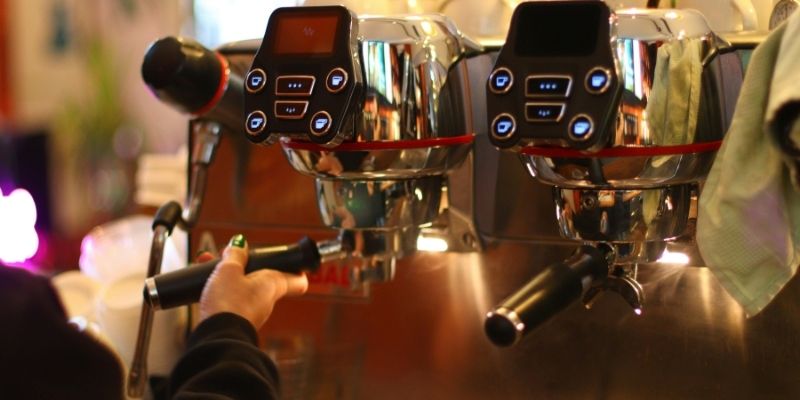
Machines without PID control benefit from a simple routine. Flush briefly, wait, then pull the shot. Consistency matters more than chasing a number. Small temperature changes alter solubility more than most grind tweaks [2].
Humidity and Why Yesterday’s Grind No Longer Works
Coffee absorbs moisture from the air. On humid days, beans swell slightly and increase resistance. On dry days, the opposite happens. This is normal. A grinder adjustment every few days is expected, not a failure.
If the coffee suddenly runs slower or faster with no other changes, look outside before blaming yourself.
Make Each Shot Count
Lock the dose, control the yield, and move the grind with intention. Taste direction tells you what to do next.
When time is limited, ignore secondary metrics. Exact shot time is flexible once flavor is balanced. Brew pressure only matters if it is clearly unstable. Do not change dose and grind simultaneously. Simplicity preserves clarity.
If the espresso tastes balanced and repeatable, stop adjusting. Improvement does not mean endless tweaking. Stability is the goal.
The moment each shot teaches you something clear is the moment you stop wasting beans and start drinking them.
References
[1] Specialty Coffee Association Coffee Standards – https://sca.coffee/research/coffee-standards
[2] Thermal Conductivity of Fluids, National Institute of Standards and Technology – https://www.nist.gov/publications/thermal-conductivity-liquids
[3] La Marzocco Home Dialing In Espresso Guide – https://www.lamarzocco.com/uk/en/dialing-in-a-traditional-espresso/?srsltid=AfmBOooVTxU5IV87sfqkQNUbEoiCRoiSHYbd-ZkVYQa4AqZNcU9iDdmJ
[4] Espresso Extraction Principles, National Library of Medicine – https://pmc.ncbi.nlm.nih.gov/articles/PMC10669957/
You May Like
-

-
Coffee
More Americans Drink Coffee Than Water: What's Behind the Numbers
-
Coffee
Best Vanilla Syrup for Coffee (and Which Ones Are Actually Worth Buying)
-
Guide
Your Coffee Storage Is Wrong: The 5 Things You Must Avoid Immediately
-
Guide
The #1 Reason Your Coffee Tastes Burnt (And How To Fix It Forever)
-
Recipe
Skip The Drive-Thru: Make A Perfect Frappe At Home In Under 5 Minutes