Coffee
How Long Do Coffee Beans Last A Comprehensive Guide to Freshness, Storage, and Quality
Author:sana
|
Released:April 25, 2026
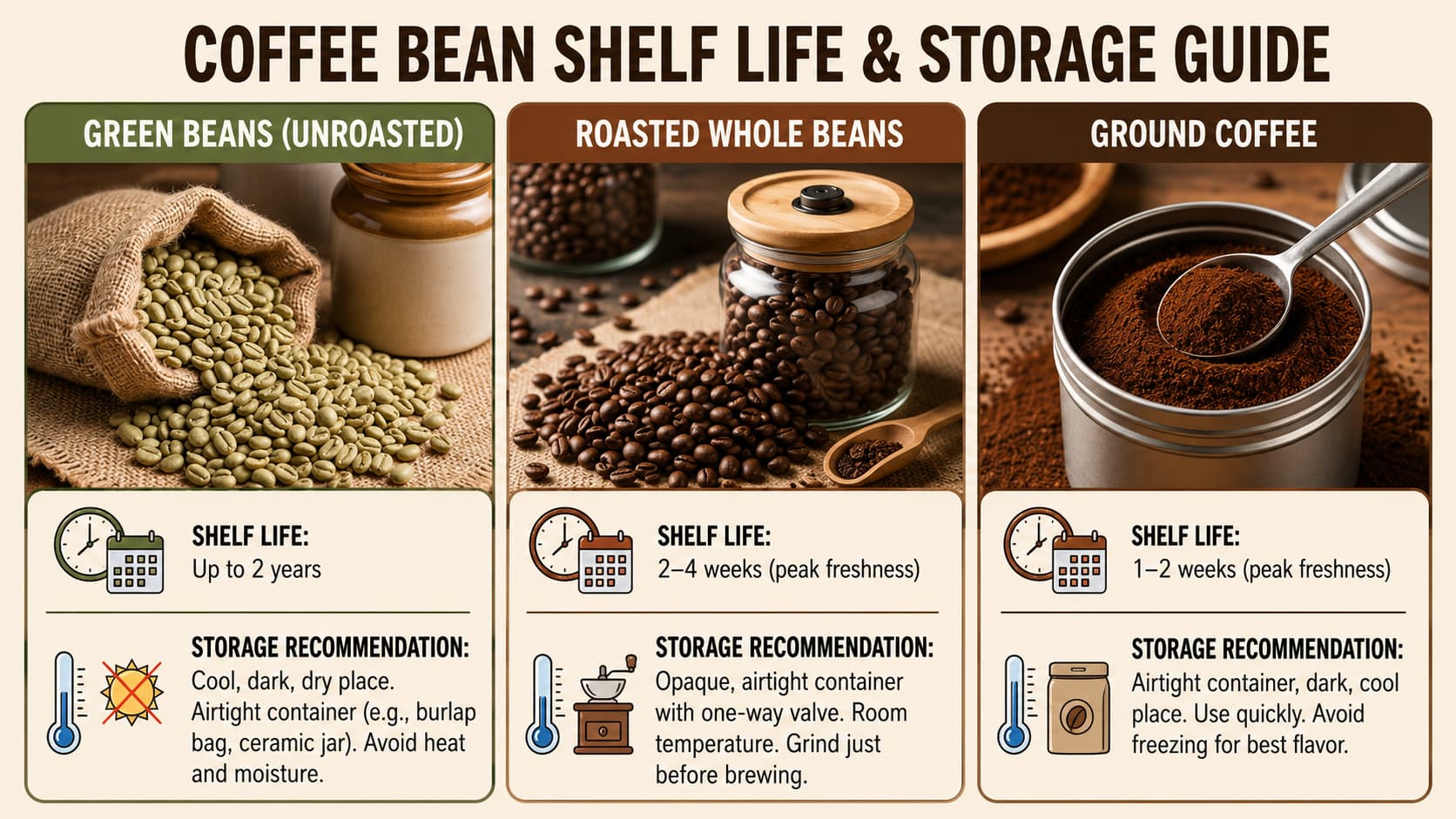
Coffee’s longevity is a crucial factor for enthusiasts and casual drinkers alike. Green coffee beans stand out in this regard, possessing an impressive shelf life of up to two years if stored under ideal conditions—specifically in a cool, dark, and dry environment. In contrast, roasted whole beans bring delight for about six months following the roast date, although this duration can be affected by the roast type; lighter roasts often preserve their flavor slightly longer than darker roasts, which usually contain more oils. Meanwhile, ground coffee has the shortest lifespan, needing to be consumed within one to two weeks for maximum flavor retention. The freshness of coffee is not solely determined by the type but also by how it's stored; airtight packaging and avoidance of moisture and air exposure are fundamental for maintaining quality. By understanding these varying freshness durations, coffee lovers can enhance their coffee experience and savor every delightful cup.
Freshness versus Expiration and Safety
For coffee enthusiasts, distinguishing between peak flavor, diminished quality, and safety is paramount. Freshly roasted coffee beans emit vibrant aromas that hint at their rich flavors. However, as time progresses, these characteristics can diminish, signaling a decline that doesn’t imply immediate spoilage. In fact, beans can remain usable for up to a month beyond their best-by date, although they will gradually lose their vibrancy and flavor, potentially developing hints of bitterness or dullness.
Manufacturer best-by dates serve as guidelines rather than definitive indicators of safety or quality. Beans may still have drinkable qualities past this date if they show no evidence of moisture or insect infestation. It is essential to watch for signs of contamination, such as unpleasant odors, visible mold, or off-flavors. Rancidity or abnormal acidity can also signal compromised quality, raising safety concerns.
To maximize enjoyment and minimize risks, coffee drinkers should ideally store their beans in airtight containers away from heat, light, and moisture. This approach safeguards both flavor and safety in every cup, ensuring a more enjoyable experience.
Coffee Bean Shelf Life Comparison
Different types of coffee products have different freshness timelines because processing methods affect exposure to oxygen, moisture, and oxidation. Green coffee beans generally have the longest storage life and can remain usable for several years when stored properly in stable conditions. Because they have not yet undergone roasting, they maintain their original chemical structure for a longer period.
Roasted coffee beans have a much shorter peak freshness window because roasting creates the aromatic compounds that gradually break down after exposure to air. Ground coffee loses freshness even faster because grinding increases the surface area exposed to oxygen, accelerating flavor and aroma loss.
Proper storage plays an important role in preserving coffee quality. Keeping coffee in an airtight container away from heat, moisture, and direct light can help slow degradation. For consumers who purchase larger quantities, controlled freezing may be an option when coffee is stored in sealed portions and protected from temperature changes.
What Makes Coffee Beans Lose Freshness
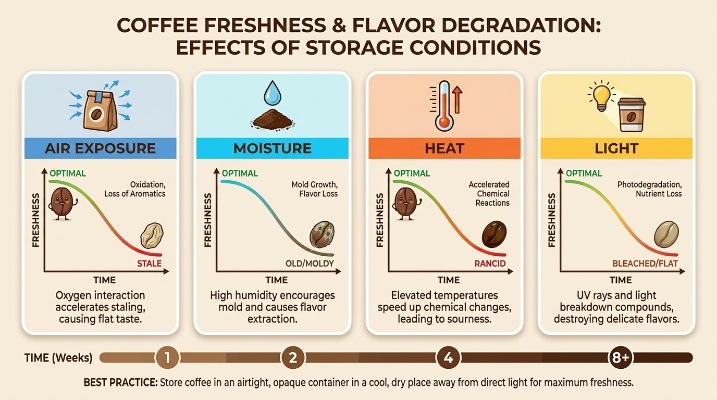
Numerous factors influence the freshness and flavor life of coffee. Oxygen exposure is a critical element; when coffee beans encounter air, oxidation takes place, resulting in stale, bitter flavors. Additionally, moisture levels are paramount; high humidity causes beans to absorb water, leading to mold formation and flavor degradation. Heat and light exposure can accelerate the deterioration of aromatic compounds and oils within coffee, further diminishing flavor quality. The grind surface area also plays a significant role; more finely ground coffee possesses a larger surface area, increasing exposure to oxygen and moisture and hastening staleness. Furthermore, the packaging type is essential; vacuum-sealed bags prolong freshness, whereas flimsy packaging allows air to infiltrate. The degree of roast influences volatility in essential oils as well; darker roasts tend to lose flavor more rapidly in comparison to their lighter counterparts. A thorough understanding of these factors will empower coffee enthusiasts to optimize their storage practices effectively.
How to Store Roasted Coffee Beans Properly
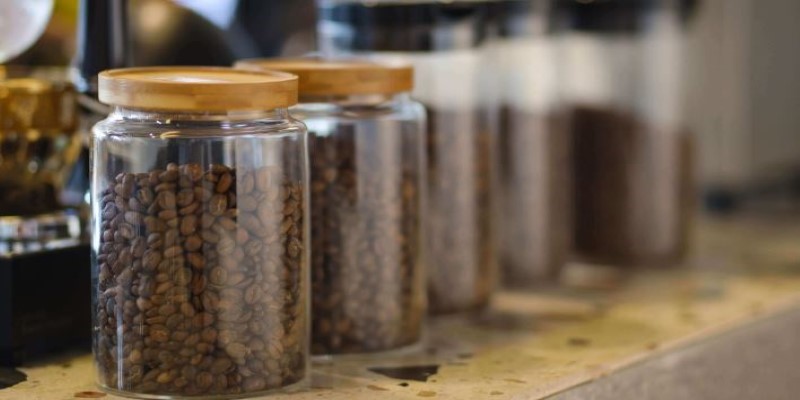
For optimal coffee bean freshness, the choice of storage container is crucial. Opt for an airtight, opaque container made from materials such as ceramic, stainless steel, or glass to shield your beans from light, air, and moisture—each of which can detrimentally impact flavor. It's advisable to avoid keeping coffee beans in their original bags, especially if resealable, as these often permit air and light penetration.
Place your chosen container in a cool, dry location away from heat sources like stoves or windows; ideal spots include pantries or cupboards. Establishing a routine can further enhance freshness by purchasing only what you need for roughly two weeks and grinding beans just prior to brewing. This minimizes exposure to air, maximizing flavor retention and ensuring each daily cup is a delightful experience.
Can You Freeze Roasted Coffee Beans for Long-Term Storage
Freezing coffee can significantly enhance its freshness if executed properly. For the best results, freeze whole beans shortly after roasting to preserve their rich flavors. Begin by portioning the beans into small, airtight bags or vacuum-sealed pouches to minimize exposure to air and moisture. It is essential to label each package with the freezing date for future reference.
When it’s time to brew, thaw the coffee by placing the bags in the refrigerator for several hours or overnight—steer clear of the microwave, as that can negatively affect taste. In contrast to regular storage, which typically keeps coffee fresh for a few weeks in cool, dark places, freezing is advantageous for beans that won’t be consumed within that time frame. This method is particularly useful for those buying in bulk or seeking variety in their brews, allowing for long-term flavor retention even after extended storage.
How to Evaluate Old Coffee
Evaluating the quality of old coffee involves straightforward techniques that anyone can employ at home. Start with visual observation: check the beans for any discoloration. Fresh coffee beans should have a rich, consistent color; dullness or excessive oiliness suggests they may be past their prime. Next, inhale the aroma. Freshly roasted coffee imparts a vibrant scent, while older coffee may smell flat or rancid. A pleasant aroma is a good indicator of freshness, while negative notes should raise immediate concerns. Finally, conducting a taste test is essential. Brew a small amount and evaluate the flavor. Fresh coffee carries a complex profile, while older coffee can taste stale or excessively bitter, lacking distinctive characteristics. If the flavor is off, consider utilizing the coffee in recipes that require lower sensitivity, such as baking. Alternatively, if the odor or taste is notably unpleasant, it is best to discard it.
By employing these simple evaluation methods, you can better judge the quality of old coffee and ensure your beverages remain both enjoyable and safe.
Key Takeaways for Maintaining Coffee Freshness
Understanding coffee freshness, storage conditions, and the factors that influence flavor quality can help coffee enthusiasts enjoy a better brewing experience. Roasted coffee beans gradually lose aroma and flavor after exposure to oxygen, heat, moisture, and light, making proper storage an important part of maintaining quality.
Keeping coffee beans in an airtight container away from direct sunlight and temperature fluctuations can help preserve freshness for longer. Purchasing suitable quantities, checking roast dates, and grinding beans shortly before brewing are also effective ways to maintain better flavor.
While different coffee products have different shelf lives, proper storage habits can significantly slow flavor deterioration and help ensure a more consistent cup of coffee over time.
You May Like
-

-
Coffee
What Is a Cortado? Complete Guide to Spain’s Perfectly Balanced Espresso Drink
-
Guide
Why Fresh Coffee Grinding Improves Flavor and Aroma
-
Guide
The Secret Behind Perfect Cold Brew Coffee at Home
-
Guide
Your Coffee Storage Is Wrong: The 5 Things You Must Avoid Immediately
-
Recipe
The Perfect Cortado: Why This Small Drink Gives The Best Caffeine Kick