Coffee
How to Grind Coffee Beans Methods, Grind Sizes, and Tools Explained
Author:sana
|
Released:May 15, 2026
Grinding coffee beans properly is fundamental for both novices and seasoned coffee enthusiasts who seek to brew the perfect cup. A correct grind is vital not only for safety by preventing overheating but also ensures consistency, which unlocks the true flavor potential of your coffee beans. Start your coffee journey by choosing an appropriate grinder tailored to your needs. Select the grind size that matches your brewing method—be it French press, espresso, or others—and fine-tune it to suit your taste preferences. This guide offers actionable steps and tips to elevate your coffee-making skills rapidly, giving you the confidence to brew like a pro in no time!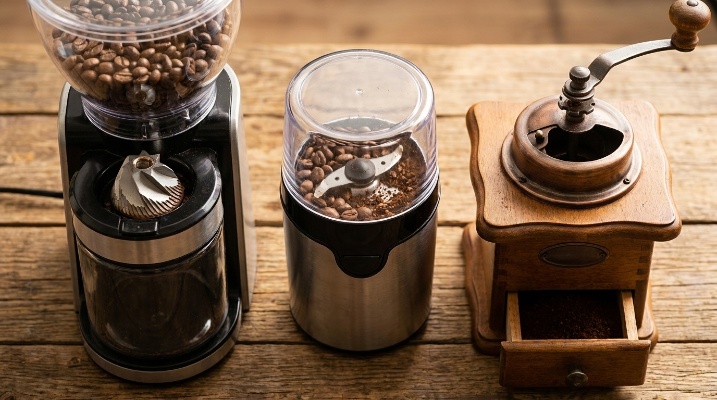
Why Grind Size and Consistency Matter
Grind consistency plays a crucial role in determining the quality of coffee extraction. When the coffee grounds are uneven, certain particles can become over-extracted while others are under-extracted, leading to a muddled flavor profile. Imagine baking cookies with both fine and coarse sugar; the texture and overall taste vastly differ based on their distribution. Moreover, the freshness of your grind significantly impacts the flavor. Once ground, coffee beans begin to oxidize, resulting in a decline in aroma and taste. A consistent grind maximizes the surface area exposed to water, thus permitting superior flavor extraction. Relying on old or inconsistent grinds can yield stale brews lacking depth and character.
Burr, Blade, and Manual Grinder Comparison
Burr Grinders
- Consistency: Burr grinders create a uniform grind size, essential for flavor extraction across diverse brewing methods, including espresso and pour-over.
- Control: They allow precise adjustments for specific brew preferences, making them the go-to choice for coffee aficionados.
- Noise Level: While generally quieter than blade grinders, burr grinders may still produce some noise.
- Price Range: Prices can vary significantly, starting from around $30 for entry-level models and exceeding $300 for premium versions.
Blade Grinders
- Pros: Blade grinders are quick and convenient, ideal for those who need a fast grind. Compact and budget-friendly, they typically cost between $20 and $50.
- Cons: However, they lack consistency, leading to uneven extraction, which negatively affects flavor.
- Noise Level: Blade grinders are generally noisier because of their high-speed motors, which can be distracting in tranquil spaces.
- Speed: They can grind beans in seconds, making them perfect for busy mornings, although this speed may compromise quality.
Manual Burr Grinders
- Advantages: Manual burr grinders are portable and often more affordable than their electric counterparts, typically priced between $20 and $80. They appeal to those who relish the ritual of coffee grinding.
- Disadvantages: They require more time and physical effort to operate and may not be the best choice for large batches.
- Best Use Scenarios: They are perfect for travel or camping where space is limited, making them ideal for single servings.
Comparison Chart
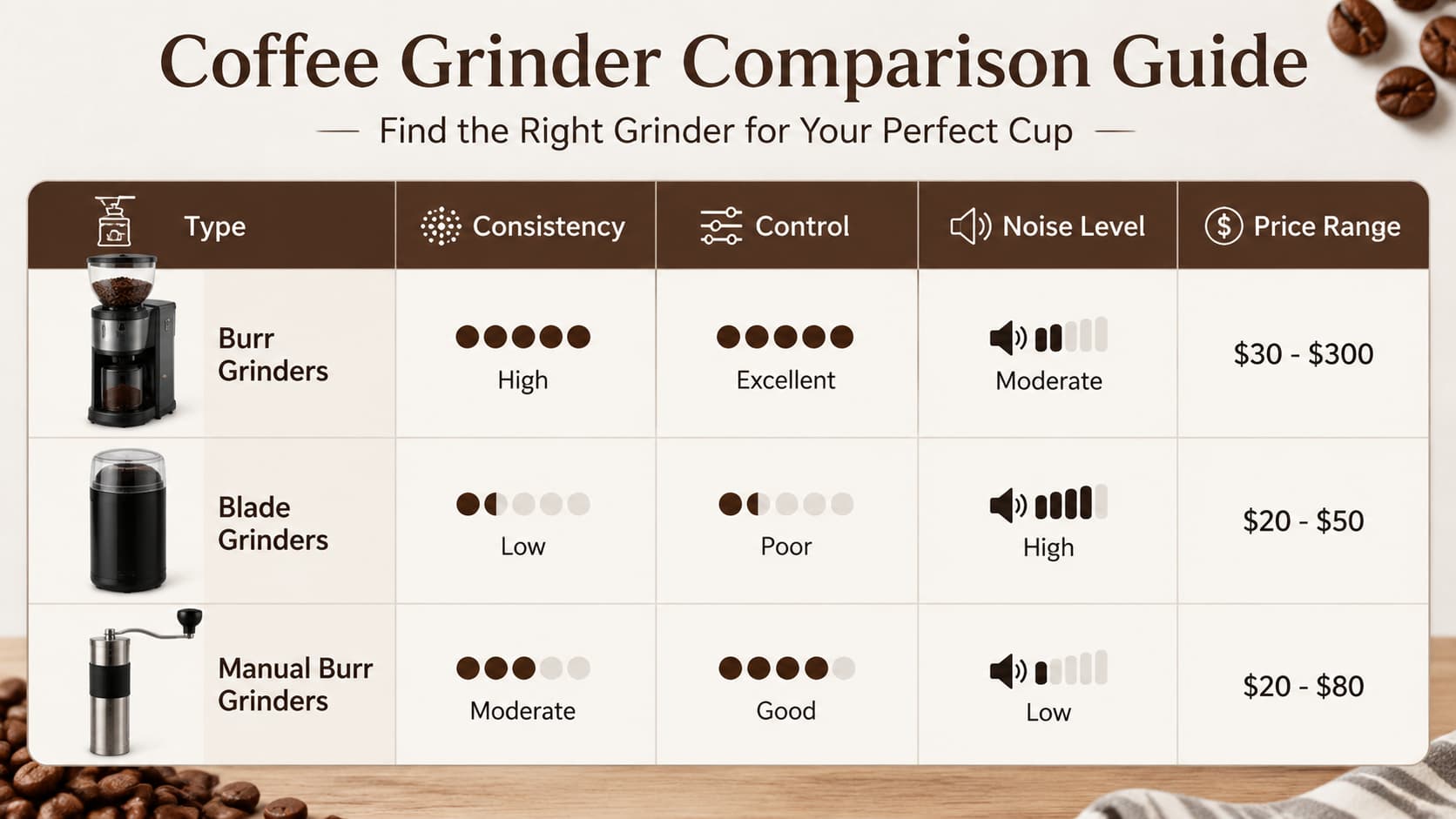
Choosing the right grinder relies on your brewing method and budget. Burr grinders are well-suited for precise brewing, while blade grinders cater to casual users. Manual grinders are perfect for coffee enthusiasts who appreciate the process and portability.
Grind-Size Chart by Brew Method
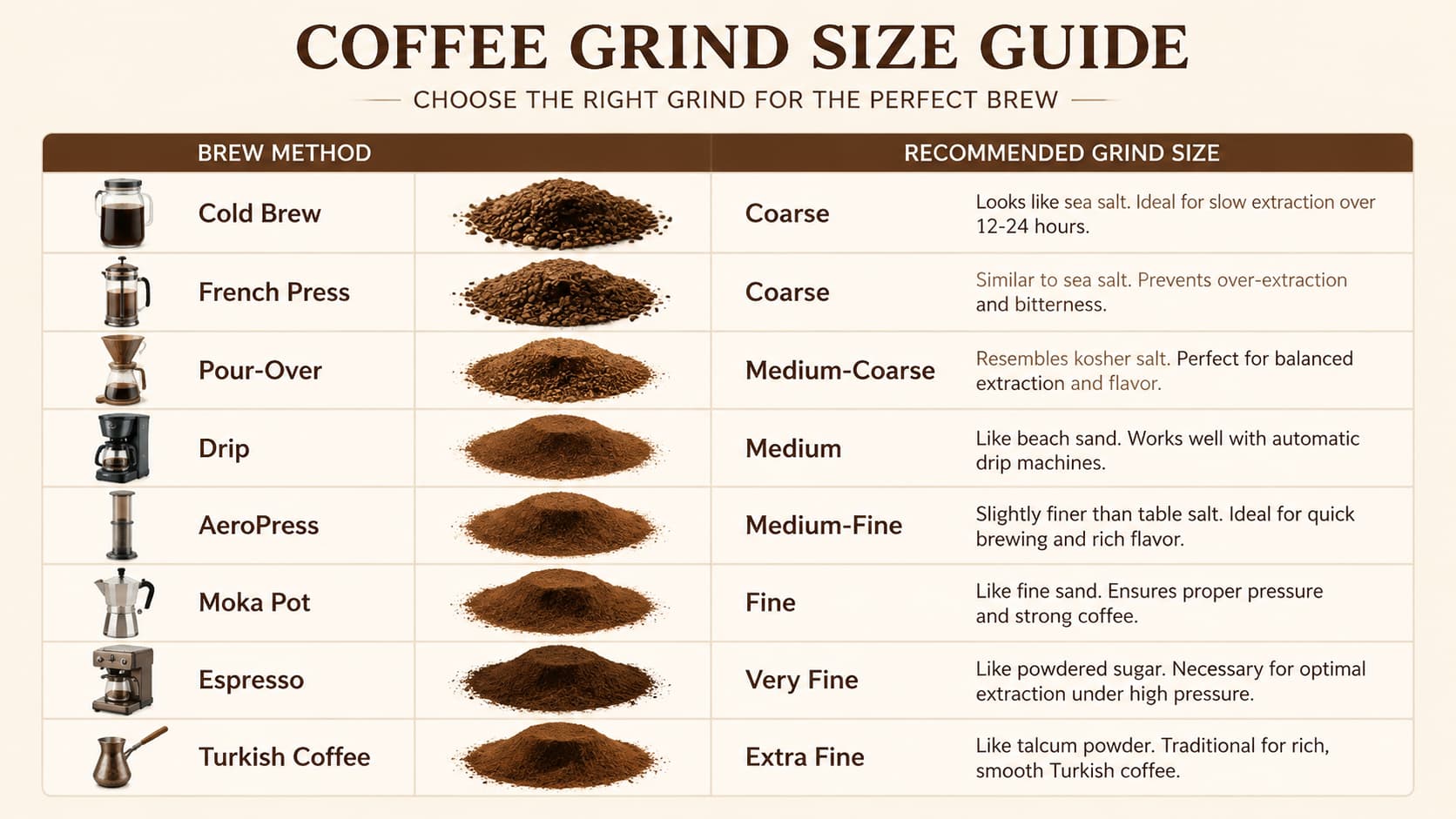
These grind sizes are merely starting points and may require adjustments based on individual taste preferences. Experimentation is encouraged, as each brewing method extracts flavors differently, and personal tweaks can lead to a more gratifying cup of coffee. Remember, achieving the perfect grind size can significantly enhance your coffee experience, so feel free to adjust the sizes to suit your brewing style and flavor preferences.
How to Measure and Grind Coffee Beans Consistently
- Weigh the Coffee Dose
- Utilize a digital scale for accuracy, weighing out 16 grams (0.56 ounces) of coffee for a standard cup (approximately 240 ml or 8 oz). For a stronger brew, consider increasing to 18 grams (0.63 ounces).
- Keep handy: 1 gram = 0.035 ounces to facilitate this transition smoothly.
- Choose a Starting Grind Setting
- For brewing drip coffee, begin with a medium grind that resembles granulated sugar. For espresso, opt for a fine grind instead.
- When using a burr grinder, start around the middle of the grind size spectrum to ensure consistency.
- Grind Immediately Before Brewing
- To preserve maximum freshness and flavor, grind your coffee just prior to brewing. This approach guards against the degradation of the beans' essential oils and aromas.
- Brew the Coffee
- Use your selected brewing method, whether it's a French press, pour-over, or espresso machine, while adhering to appropriate water temperature guidelines (approximately 200°F or 93°C).
- Taste and Adjust
- After tasting, modify one variable at a time—grind size, coffee dose, or brewing time—to perfect your brew.
Importance of a Repeatable Process
Adhering to this structured workflow promotes consistency and enhances your brewing experience, allowing you to replicate excellent results and effectively refine your palate.
How to Dial In by Taste and Brew Behavior
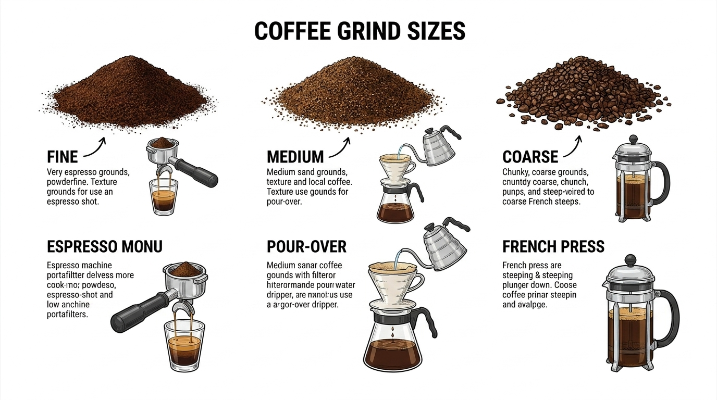
Adjusting grind size is a fundamental technique for coffee enthusiasts striving to perfect their brew. If your coffee tastes sour, it often indicates under-extraction, which usually results from a grind that is too coarse. In such cases, consider reducing the grind size to increase the surface area exposed to water, thereby facilitating better extraction. Conversely, if your brew leans toward bitterness, this could be a sign of over-extraction caused by a grind that is too fine. For this situation, increasing the grind size will produce a milder flavor profile.
For brewing methods like pour-over and AeroPress, starting with a medium grind yields a balanced extraction. For French press, opting for a coarser grind helps avoid a muddy cup. With espresso, a fine grind is essential, yet beware; even slight variances can either deepen the richness or induce overpowering bitterness.
Essentially, let taste be your guiding star. Beginners may find delight in iterative testing; slightly adjusting grind settings while noting the differences in flavor can lead to surprising discoveries. Seasoned users can delve into nuances by maintaining detailed brew logs, analyzing how grind size affects extraction and personal taste preferences. Embrace the adjustments, as each cup represents another step towards perfecting your brewing process!
Common Grinding Mistakes
Here are some frequent pitfalls beginners encounter in the world of coffee grinding, along with practical advice to help you steer clear of these common mistakes:
- Incorrect Grind Size: Different brewing methods demand specific grind sizes. For instance, espresso requires a fine grind, while a French press calls for coarser particles. Choosing the wrong size can lead to undesirable over-extraction or under-extraction.
- Neglecting to Weigh Coffee: Accurate measurements are essential for consistent flavor. Utilizing a kitchen scale assists in measuring out your coffee dose precisely, ensuring excellent brews each time.
- Grinding in Advance: Pre-ground coffee loses flavor quickly because of oxidation. Grind your beans right before brewing to fully enjoy fresh aromas and taste.
By being conscious of these mistakes, you are well on your way to mastering the art of coffee grinding, ensuring a delicious cup with each attempt!
How to Clean and Maintain a Coffee Grinder
Handling hot equipment and sharp grinder blades necessitates caution. For safety, always wear protective gloves while handling grinder parts, particularly the blades, to prevent cuts. Let grinders cool down after use before cleaning to avoid burns. Additionally, maintaining a clear workspace minimizes hazards, making your cleaning and brewing experience safer.
Cleaning Tips for Different Grinders
Maintaining a clean grinder not only improves coffee flavor but also prolongs the device’s life. For burr grinders, disassemble according to the manufacturer's instructions and utilize a soft brush to remove coffee grounds and oils from both the burrs and chamber. For blade grinders, clean the interior with a damp cloth while ensuring the blade remains stationary and free from residue.
Always refer to the user manual for cleaning procedures tailored to your specific grinder model. Regular cleaning not only ensures optimal performance but also prevents old coffee flavors from corrupting your fresh brews. Follow these routines diligently for consistently delicious coffee and to keep your equipment in top condition!
Key Takeaways for Better Coffee Grinding
Grinding coffee beans correctly is an important step in achieving better flavor and consistency in every cup. Choosing the right grinder, using an appropriate grind size, and adjusting the settings based on your brewing method can significantly influence extraction and overall coffee quality.
Different brewing techniques require different grind levels, from coarse settings for methods like French press and cold brew to finer settings for espresso preparation. Developing a consistent grinding routine and maintaining your equipment properly can help create more predictable results over time.
By understanding how grind size, freshness, and brewing methods work together, coffee enthusiasts can improve their preparation process and explore a wider range of flavors from their favorite beans.
You May Like
-

-
Coffee
Best Ground Coffee Everything You Need to Know Before You Buy
-
Coffee
Your Daily Cup of Coffee Might Do More for Aging Than You Think
-
Coffee
Instant Coffee Can Taste Great. You're Probably Doing It Wrong
-
Coffee
Moka Pot Guide: The Italian Secret To Strong Espresso (Under $30)
-
Guide
Flat White Vs. Latte: The Crucial Difference That Changes Your Order