Coffee
Understanding Roasted Coffee Beans Transformation, Flavor, and Brewing
Author:sana
|
Released:May 15, 2026
1. Green Coffee Seed Versus Roasted Coffee Bean
The differences between green coffee seeds and roasted coffee beans are striking, particularly regarding flavor, aroma, and chemical composition, all of which dramatically shape the overall coffee experience. Green coffee seeds are characterized by a grassy, raw taste, often described as bitter and astringent, without the complex characteristics offered by their roasted counterparts. In contrast, roasted coffee beans release a symphony of flavors, ranging from rich chocolate to fruity undertones, all thanks to the Maillard reaction and caramelization processes that occur during roasting. This transformation yields a depth of flavor that is crucial to both the taste and aroma of the brewed beverage. For example, chlorogenic acids present in green beans break down during roasting, leading to reduced acidity and the emergence of rich oils that enhance aroma. Additionally, the roasting process generates numerous aromatic compounds, such as furans and phenols, contributing to the enticing scent often associated with freshly brewed coffee. Such complex flavors and aromas underscore roasting's pivotal role in determining coffee's quality and enjoyment.
2. What Happens During Roasting
The roasting process initiates significant physical and chemical changes in coffee beans that profoundly affect their characteristics.
- Moisture Loss: As coffee beans are roasted, they experience a notable reduction in moisture content, dropping from approximately 10-12% in green coffee beans to about 1-2%. This loss contributes to the crunchy texture of the roasted beans and plays a crucial role in brewing, as well-dried beans ensure optimal flavor extraction.
- Browning Reactions: The Maillard reaction begins at around 300°F (150°C) and triggers the transformation of green beans into brown ones, developing rich flavors and enticing aromas. The caramelization of sugars further enhances these flavors, leading to a delectable profile for roasted beans.
- Gas Formation: Roasting causes the accumulation of gases, primarily carbon dioxide (CO2), within the beans. This gas buildup contributes to a phenomenon known as the first crack, where audible sounds signal the beans expanding and cracking open. The release of gas is vital for flavor development, as it influences how beans release oils and flavors during brewing.
- Increased Porosity: The structural changes that occur during roasting lead to increased porosity in the beans, allowing better heat and moisture penetration during brewing. This enhanced porosity fosters optimal extraction and results in a fuller-bodied cup of coffee.
- Aroma Development: The volatile compounds released during roasting combine to create a unique and complex aromatic profile. The interplay of aromas and flavors developed throughout this process significantly influences the overall coffee experience, thus making knowledge of roasting paramount for both enthusiasts and baristas alike.
3. Roasting-Stage Explanation Table
Below is a summary of key stages in the roasting process, outlining what occurs at each phase:
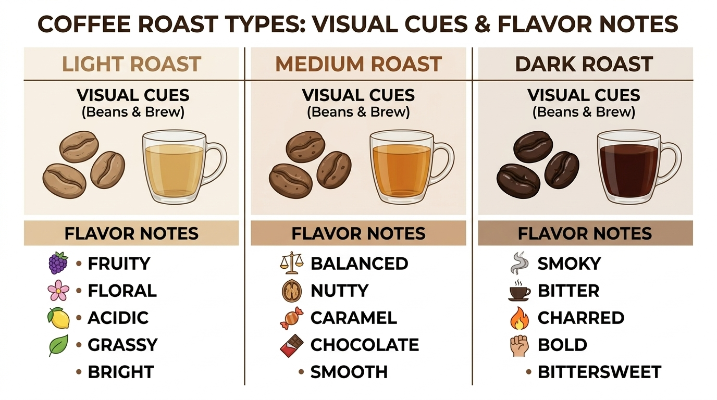
4. Light, Medium, and Dark Roast Comparison
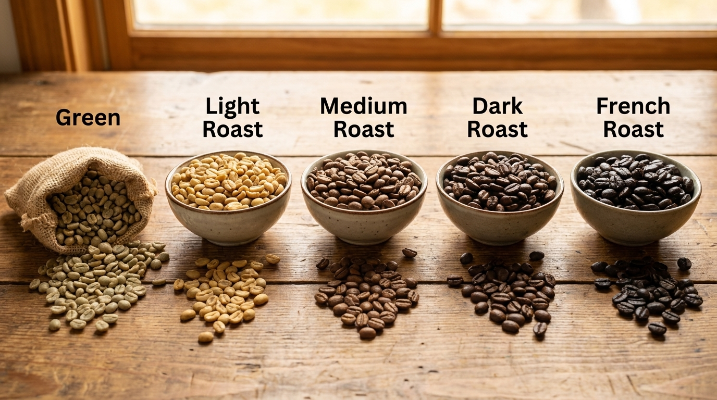
Exploring the various roast types can significantly enrich your coffee experience. Understanding the characteristics of light, medium, and dark roasts reveals how each type presents distinct flavor profiles, aromas, and acidity levels, catering to diverse preferences.
- Light Roast features a bright, lively flavor often described as fruity or floral. With heightened acidity, it invigorates the senses with citrus or berry notes while maintaining a sweet aroma reminiscent of the unroasted green beans.
- Medium Roast, generally the most popular, balances acidity with body, resulting in a harmonious drinking experience. One might encounter flavors of chocolate and nuts, evoking feelings of warmth and comfort. The aroma is inviting and often becomes a favorite among casual consumers.
- Dark Roast offers bold, deep flavors characterized by a bittersweet aftertaste, presenting lower acidity while often showcasing smoky and caramel notes. However, caution is warranted; a rich, dark color is not a definitive indicator of superior quality or caffeine content
5. Degassing, Freshness, and Storage
Degassing is a vital process that occurs after roasting, during which carbon dioxide (CO₂) is released. This release significantly influences the preservation of a coffee's freshness. Freshly roasted beans continue to emit CO₂ for several days post-roasting, and if stored improperly, this gas can create pressure inside sealed containers, leading to uneven flavor and aroma degradation. As freshness declines, so does the equipment's ability to deliver the rich flavors that coffee lovers treasure.
To maintain coffee quality, proper storage is essential. Utilize an airtight container to minimize exposure to oxygen, which causes rancidity. Choose opaque containers over glass jars to protect beans from light exposure, which adversely affects flavor. Ideally, store the container in a cool, dark place, away from heat sources like stoves or direct sunlight. For longer lifespan, consider purchasing smaller amounts of coffee to ensure you consume it while still fresh. Additionally, avoid freezing, as moisture may spoil flavors. Adhering to these simple storage guidelines can enhance your home brewing experience significantly, ensuring every cup is as delightful as possible.
6. How Roast Interacts with Grind and Brewing
The roast level profoundly influences not only the grind size but also the brewing methods employed, which ultimately affects flavor extraction. Lighter roasts, typically associated with bright acidity and floral notes, often benefit from finer grinds and quicker brewing methods, like pour-over or siphon. A grind that is too coarse can lead to under-extraction, dulling the vibrant flavors that define these beans.
Conversely, darker roasts boast deeper, bolder flavors with a heavier body, necessitating a coarser grind to prevent over-extraction that may induce bitterness. Brewing methods such as French press or cold brew are particularly well-suited for these roast profiles, as the longer brewing time facilitates robust flavor development without allowing acidity to overwhelm the cup.
To achieve optimal flavor extraction, consider adjusting your grind size in accordance with the roast type and brewing method. For instance, utilizing a medium grind for a medium roast in a standard drip coffee maker can highlight a balance of sweetness and acidity. Understanding the interplay between these elements ensures that each cup not only resonates with the roast profile but also delivers a satisfying flavor experience for coffee enthusiasts.
7. Label-Reading Guide
When purchasing coffee, understanding roast-date and roast-level labels is key to enhancing your experience. The roast date reveals when the beans were roasted; for the freshest flavor, select beans that have been roasted within the last two weeks. The roast level—ranging from light to dark—affects flavor profiles, with light roasts often exhibiting more acidity and fruity notes, while dark roasts lean towards bolder, chocolatey flavors. By attentively reading these labels, you can choose coffee that aligns with your taste preferences and guarantees maximum freshness to elevate every cup you brew.
Understanding Roasted Coffee Beans for Better Coffee Experiences
Understanding roasted coffee beans helps coffee enthusiasts make better decisions about flavor, freshness, and brewing methods. The roasting process plays an essential role in developing the aroma, taste, and characteristics that define each coffee variety, making roast level an important factor when selecting beans.
By learning how different roasting styles influence flavor profiles and how storage and brewing techniques affect the final cup, consumers can better match coffee beans with their personal preferences. Whether choosing a lighter roast for brighter flavors or a darker roast for a richer body, knowledge of roasted coffee beans allows for a more consistent and enjoyable coffee experience.
As coffee culture continues to evolve, understanding the relationship between roasting, flavor development, and brewing methods provides a foundation for exploring different coffee styles and appreciating the craftsmanship behind every cup.
You May Like
-

-
Coffee
Types of Coffee Beans Explained Arabica, Robusta, Flavor Profiles, and Brewing Differences
-
Coffee
Your Coffee Beans Changed and Your Brew Tastes Off. Here’s How to Fix It.
-
Coffee
Sustainable Coffee Trends In 2026: From Farm To Cup
-
Coffee
Best Coffee Tampers for Espresso Beginners: 5 Picks for Consistent Shots
-
Recipe
Mocha Milkshake Recipe: You're One Step Away From Pure Chocolate Bliss