Coffee
Ultimate Guide to Coffee Roasting Equipment Everything You Need to Achieve the Perfect Roast
Author:sana
|
Released:April 28, 2026
When it comes to coffee roasting, the right equipment can mean the difference between a mediocre cup and an exceptional brew. Roasting is not merely a process; it’s an art form that unlocks the rich flavors and alluring aromas hidden within each coffee bean. In this ultimate guide, we will delve into the essential tools needed to achieve the perfect roast, ranging from humble home setups to advanced commercial equipment. Understanding key concepts—including heat transfer, roasting times, and bean types—is vital as these elements significantly influence the final taste. Choosing the right equipment tailored to your roasting style not only enhances flavor but also elevates the overall coffee experience. Whether you’re a complete novice or a seasoned roaster, equipping yourself with the right knowledge and gear will empower you to create coffee magic in your kitchen. Let’s embark on this flavorful journey!
2. Essential Coffee Roasting Equipment
2.1 Home Coffee Roasters
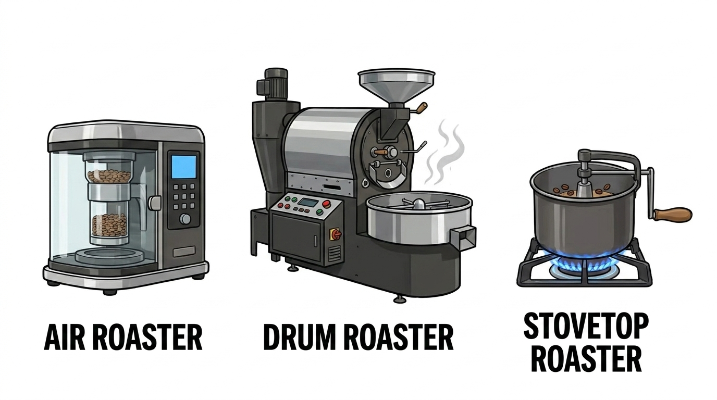
Home coffee roasting has surged in popularity among coffee enthusiasts, granting them the freedom to explore flavors and roasting profiles. There are three primary types of home coffee roasters: air roasters, drum roasters, and stovetop roasters.
Air roasters utilize hot air for roasting coffee beans, delivering a fast and efficient method often yielding lighter roasts. Their compact design and straightforward operation make them especially appealing to beginners. On the other hand, drum roasters rotate beans within a heated drum, promoting an even roast with a depth of flavor. However, these typically require more attention and tend to come at a higher price point. Stovetop roasters represent a cost-effective and straightforward option, relying on one of the oldest roasting methods that necessitate precise timing and constant monitoring to achieve optimal results.
Pros and Cons:
- Air Roasters: Pros include speed, energy efficiency, and user-friendliness; cons involve limited capacity and simpler flavor profiles.
- Drum Roasters: Pros feature even roasting and extensive flavor development; cons are the higher cost and a steeper learning curve.
- Stovetop Roasters: Pros encompass affordability and a hands-on experience; cons include challenges in achieving consistency and a more prolonged roasting process.
For those considering an investment, notable models include the Breville BDB540XL for air roasting, renowned for its intuitive interface; the Behmor Connected Coffee Brew for drum roasting enthusiasts, which incorporates smartphone connectivity; and the Popcorn Pumper, a cherished favorite among stovetop roasting aficionados for its versatility and fun approach.
2.2 Commercial Coffee Roasters
Commercial coffee roasters are specifically designed for larger-scale operations, showcasing advanced technologies that allow for precise control. In contrast to home models, commercial units feature larger batch sizes, typically ranging from 1 to 20 kilograms, allowing professional roasteries to meet customer demand efficiently. They also offer sophisticated control systems that facilitate precise temperature management, programmable roasting profiles, and real-time monitoring to ensure consistency. Among the popular models currently available, the Probat P Series is celebrated for its durability and high performance, while the Diedrich IR utilizes infrared technology to enhance flavor while ensuring energy efficiency.
2.3 Accessory Equipment
Enhancing the coffee roasting experience involves utilizing various essential accessories for precision and quality control. A digital scale is vital, allowing roasters to measure coffee beans accurately and maintain consistent batch sizes. Additionally, a thermometer plays a crucial role in monitoring bean temperatures throughout the roasting stages. A high-quality roasting pan is equally important for achieving even heat distribution following the roast. These accessories significantly contribute to developing the desired roast profile, enabling both novice and experienced roasters to refine their skills and consistently deliver excellent coffee results.
3. Ingredients for Perfect Roasting
3.1 Types of Coffee Beans
The foundation of successful coffee roasting lies in the selection of beans, primarily Arabica and Robusta. Arabica beans are revered for their sweet and delicate flavor, often boasting higher acidity and nuanced taste profiles, making them ideal for gourmet roasting. Conversely, Robusta beans provide a bolder, more bitter flavor, characterized by a heavy body and lower acidity, with higher caffeine levels that yield a stronger brew. Recognizing these distinctions is vital as they directly influence the roasting process and the resulting flavor profile.
3.2 Flavor Profile Considerations
The origin of coffee beans significantly impacts their roasting characteristics. Beans sourced from Africa usually feature bright acidity and fruity notes, whereas beans from South America often reveal chocolate and nutty flavors. When selecting beans, understanding the region is paramount: Central American beans deliver a well-balanced taste that suits medium roasts, while beans from Indonesia, with their earthy tones, perform best in darker roasting scenarios. This awareness assists in making informed choices to achieve the desired flavor experience.
4. Coffee Roasting Steps
4.1 Preparation
Selecting the right coffee beans is paramount for a successful roast. Seek out high-quality, specialty-grade green beans that align with your flavor preferences—whether that’s fruity, nutty, or chocolatey. After choosing your beans, ensure that your roasting equipment is set up properly; it should be clean and in good working order. Verify your heat source, thermometer, and cooling apparatus to prevent any mishaps during the roasting process.
4.2 Roasting Process
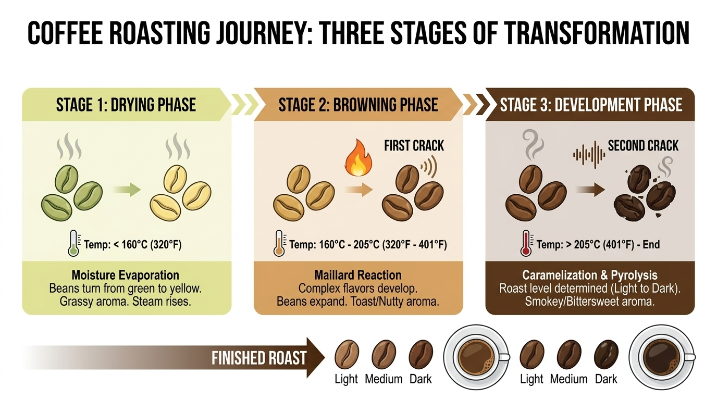
The roasting process unfolds in three primary stages: drying, browning, and development.
- Drying: This initial phase lasts approximately 4-8 minutes, during which moisture evaporates from the beans. Keep an eye on the color, aiming for a light brown hue. Additionally, monitor the aroma—nutty scents indicate progress.
- Browning: This stage involves the caramelization of sugars within the beans and lasts around 4 to 8 minutes. Watch for a notable color change from light to rich brown and a sweet aroma. For beginners, it’s advisable to take detailed notes about timings and roast depths to help replicate successful outcomes in the future.
- Development: The final stage is critical for flavor complexity and can last 2-6 minutes. Be attentive to sound changes—like the first crack—during this phase. The aroma should evolve into a rich, chocolatey scent. For seasoned roasters, consider experimenting with extended development times to uncover deeper flavors. Take tasting notes to refine your roasting technique and adjust your roast profile accordingly.
4.3 Cooling and Storage
Following the roasting process, rapidly cooling the beans is essential to halt the roasting and maintain optimal flavor. Utilize a cooling tray or fan to disperse heat effectively; aim to cool the beans within 5-10 minutes. For storage, place the cooled coffee in an airtight container stored away from light, moisture, and heat. A cool, dark location is ideal to preserve freshness, with recommendations to consume the beans within two weeks for peak flavor enjoyment.
5. Variations in Coffee Roasting Techniques
Coffee roasting is an art influenced by multiple factors, including altitude, humidity, and temperature. Beans grown at higher altitudes often exhibit denser structures, necessitating refined roasting techniques to enhance their flavors. Conversely, varying humidity levels can impact moisture content, affecting roasting consistency. Temperature plays a crucial role as it governs the developmental stages of the roast, ultimately defining flavor profiles.
Roasters typically select among three popular methods: light, medium, and dark. Light roasts emphasize the origin flavors, resulting in bright acidity and fruity notes. Medium roasts strike a balance, melding acidity with sweetness to offer a fuller body and developed flavors. Dark roasts yield bold, rich tastes, often complemented by chocolatey or smoky undertones. Understanding these variations allows both novice and experienced coffee enthusiasts to appreciate the rich nuances achievable through the roasting process.
Embrace Your Coffee Journey
Throughout your coffee journey, equipping yourself with the right roasting equipment is paramount. As explored in this guide, understanding and selecting the appropriate tools is crucial for achieving the perfect coffee profile suited to your palate. Do not hesitate to embrace experimentation! Explore various machines and roasting techniques to discover what resonates with your unique flavor preferences. Whether you prefer a light, fruity roast or a robust, deep blend, every decision you make contributes to the richness of your coffee experience.
The world of coffee is vast and inviting, filled with endless possibilities. Arm yourself with knowledge and the right tools, and continue to explore—each roast presents an opportunity to refine your craft. Let your passion for coffee lead you to new discoveries, deeper appreciation, and heightened enjoyment of every cup. Happy roasting!
You May Like
-

-
Coffee
Home Espresso Cleaning: The Dosage Trick Nobody Tells You
-
Coffee
I Tested 7 Ways to Remove Coffee Stains — Results Inside
-
Coffee
Your Coffee Beans Changed and Your Brew Tastes Off. Here’s How to Fix It.
-
Coffee
Moka Pot Guide: The Italian Secret To Strong Espresso (Under $30)
-
Recipe
Turkish Coffee: The Intense, Foamy Recipe Your Kitchen Needs Today