Coffee
How to Grind Coffee Beans Without a Grinder Practical Methods and Tips
Author:sana
|
Released:May 7, 2026
How Grinding Coffee Beans Without a Grinder Affects Quality
Using improvised techniques to grind coffee beans results in considerable variability in the quality of the grounds produced. Methods such as a rolling pin, mortar and pestle, or food processor can produce uneven grind sizes, which in turn affects extraction rates during brewing. Coarser particles may leave your coffee lacking in flavor, while finer particles can lead to over-extraction, yielding a bitter brew.
It is crucial to recognize that these makeshift methods are not meant to be permanent solutions. The lack of uniformity in grind size directly impacts the final flavor profile, underscoring the importance of grind consistency in creating a satisfying cup of coffee. Depending on your brewing technique—be it a French press, drip coffee maker, or pour-over—the results will greatly vary. Thus, understanding the influence of each grinding method on the brewing process is essential for honing in on your ideal flavor experience.
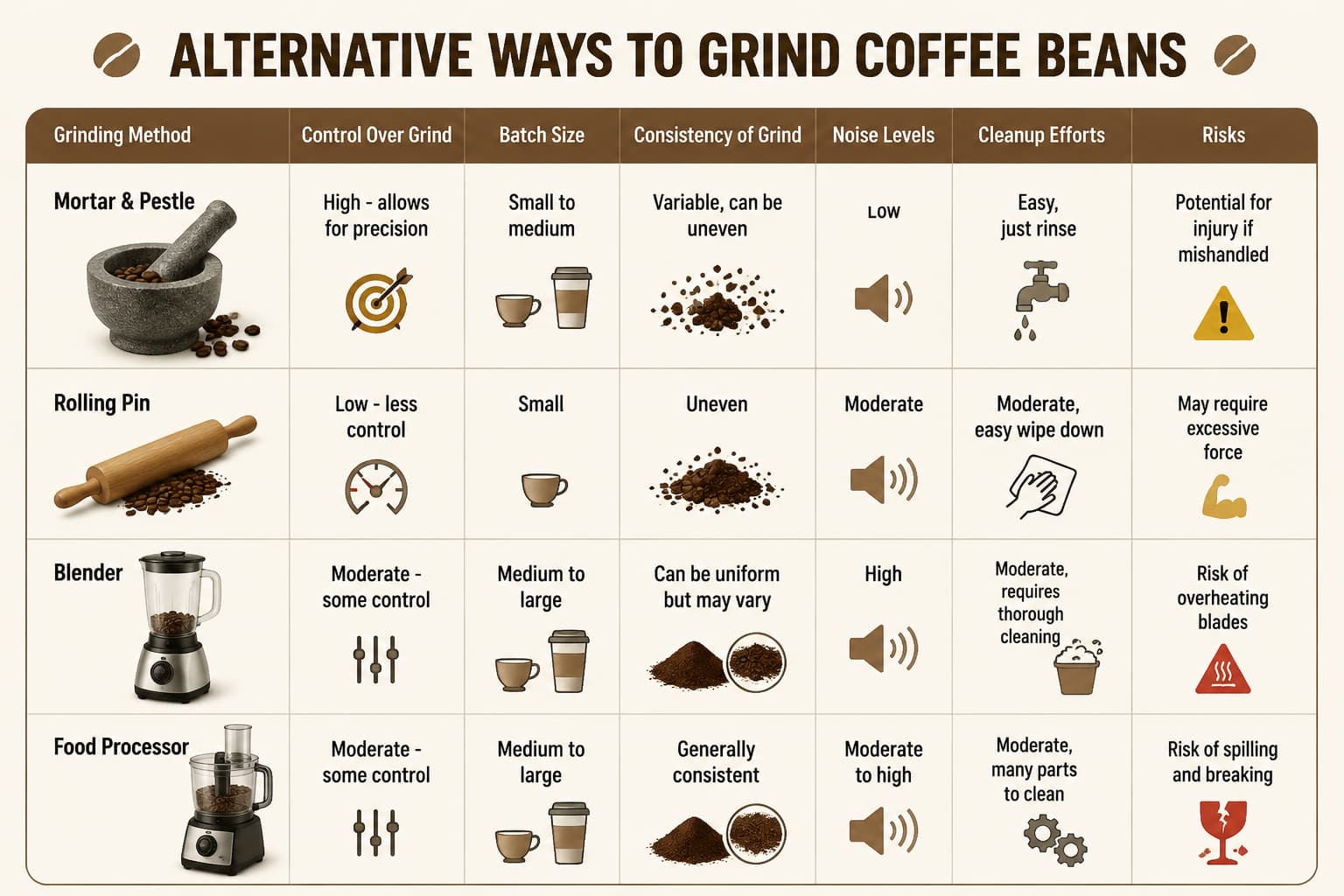
This comparison table clearly demonstrates the trade-offs associated with various household grinding methods for coffee beans. While the mortar and pestle allows for the highest level of control for those seeking specific consistencies, it is limited to smaller batches. The rolling pin is an easily accessible option but compromises on grind quality and control, making it best suited for coarser grounds. Conversely, blenders and food processors facilitate faster grinding for larger quantities of beans; however, they come with added concerns regarding noise and the complexity of cleanup. Understanding the risks tied to each method is essential for ensuring safe and effective grinding, highlighting the need to select the right tools aligned with your desired brewing outcomes.
How to Grind Coffee Beans With a Mortar and Pestle
The mortar and pestle is a classic method for grinding coffee beans, offering unmatched control over the grind size for small batches. To get started, place a measured quantity of coffee beans—around two tablespoons—into the mortar. Utilize the pestle to apply firm pressure, gently pressing down and crushing the beans. You should rotate the pestle in a circular motion, which allows the beans to break down gradually. Note that this method requires patience; the finer the grind you wish to achieve, the more effort you must exert.
Monitor your desired consistency: a coarse grind might need only a few seconds, whereas a finer grind could take anywhere from two to five minutes of consistent work. Expect a moderate noise level, akin to light pounding or grinding, which may disrupt a calm atmosphere. Although you could achieve a reasonably uniform consistency, some beans might remain coarser than others, potentially affecting the quality of your brew. Nonetheless, the freshness and richness derived from freshly ground beans often outweigh these minor inconsistencies, ultimately enhancing your overall brewing experience.
How to Grind Coffee Beans With a Rolling Pin
The rolling pin is a practical and straightforward tool for those who find themselves without a grinder. To begin, measure out your desired amount of coffee beans—about a half-cup is manageable. Place the beans between two sheets of parchment paper or inside a sturdy plastic bag to minimize mess. Next, apply even pressure with the rolling pin, rolling back and forth over the beans. It's vital to control the pressure and speed applied; lighter pressure will yield coarser grounds, while increased force or a faster rolling motion will produce finer grounds.
To ensure the best grind size, take frequent breaks to inspect the consistency of the coffee grounds. If you're preparing coffee for espresso, aim for a very fine texture, while a medium grind is sufficient for drip coffee.
Cleanup is straightforward, involving the disposal of any leftover coffee particles from your parchment or bag, followed by a quick wipe down of the rolling pin to remove any oils and residue. Bear in mind that this method may not yield perfectly uniform grounds, which could influence your coffee's flavor. However, it provides a rewarding, DIY experience in coffee brewing when a grinder is out of reach—and with practice, it can become quite enjoyable!
Using a Blender or Food Processor for Grinding Coffee Beans
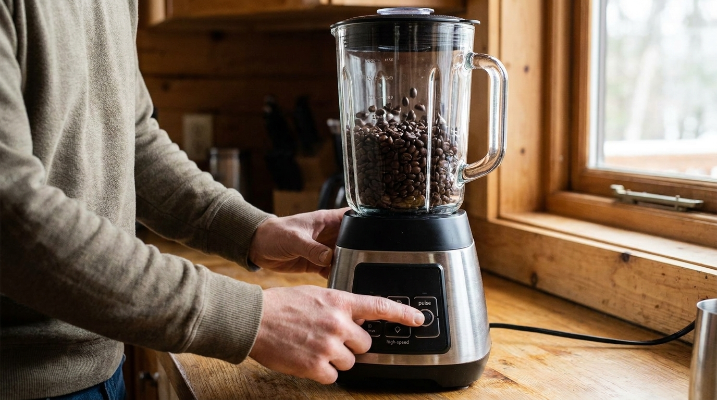
Employing a blender or food processor as a grinding tool can effectively substitute for traditional coffee grinders. Start by loading the desired number of beans into the container, being mindful not to exceed the maximum fill line. Prioritize safety by avoiding continuous operation of the device; instead, utilize the pulsing method to prevent overheating of the beans, which can adversely affect flavor and aroma.
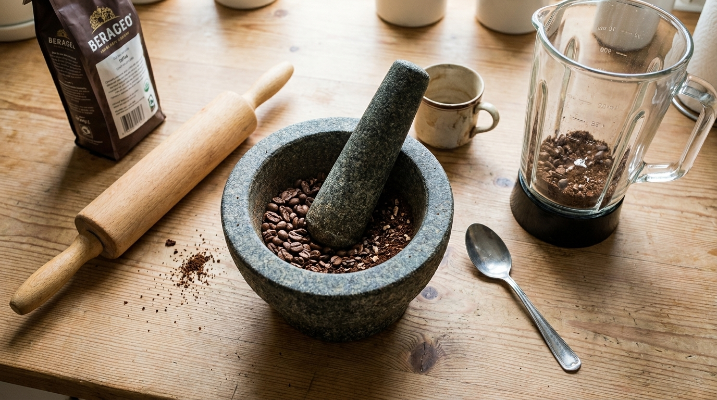
Best practices recommend allowing the blades to cool between grinding bursts to minimize the risk of overheating. Misusing the blender or food processor—such as overloading or introducing damp beans—can result in damage or inferior-quality grounds. To achieve optimal results, grind beans in smaller batches, regularly check the consistency, and adjust the grinding time as necessary to reach the desired coarseness for your brewing method. This level of precision can enhance your overall coffee experience.
Choosing the Right Grind Size for Each Brewing Method
The grind size of your coffee beans is paramount in maximizing flavor extraction during brewing. Different brewing techniques necessitate distinct textures of coffee grounds, impacting the overall taste and quality of your beverage. For example, a French press requires a coarse grind comparable to breadcrumbs, allowing full immersion without risking over-extraction. Alternatively, espresso demands a fine grind; its powder-like consistency is crucial for enhancing pressure-based extraction. Medium grinds work well for drip coffee makers, resembling table salt, striking a perfect balance between flavor extraction and brewing duration.
When utilizing improvisational grinding methods, attaining the ideal texture may require some patience and repetition. Recognizing the correct grind for your brewing approach not only sets realistic expectations but also significantly improves your coffee experience. If you’re preparing cold brew, for instance, a coarser grind helps prevent bitterness. Overall, understanding the necessary texture for each brewing method can elevate your coffee crafting skills remarkably.
Common Coffee Grinding Mistakes and How to Avoid Them
Grinding coffee beans without a grinder often leads to common pitfalls, such as over-grinding or under-grinding. Over-grinding may impart bitter flavors, whereas under-grinding could result in weak, imbalanced coffee. Thorough cleanup is equally crucial; leftover residue from previous grinding sessions can taint your brew with undesirable flavors, negatively influencing the overall taste. To avoid this, ensure that all tools utilized are impeccably cleaned before each use.
For those struggling with these improvised grinding methods, consider consulting a local coffee roaster. Many establishments offer grinding services, ensuring that your beans are ground to the perfect consistency for your brewing method. Alternatively, purchasing small amounts of pre-ground coffee might provide a convenient workaround, letting you enjoy a well-balanced cup without the hassle of grinding at home. This choice not only saves valuable time but also guarantees an exquisite flavor profile with every sip!
Key Takeaways for Grinding Coffee Beans Without a Grinder
Grinding coffee beans without a dedicated grinder is possible with common kitchen tools such as a blender, food processor, mortar and pestle, or rolling pin. However, each method produces different levels of grind consistency, which can affect extraction and the final flavor of your coffee.
For the best results, choose a grinding method that matches your brewing style and adjust your expectations based on the available tools. Coarser brewing methods, such as French press or cold brew, are generally more forgiving when the grind size is less consistent, while espresso and other fine-grind methods require greater precision.
Although these alternatives can be useful when a grinder is unavailable, investing in a quality coffee grinder remains the best option for coffee drinkers who want greater control and consistency. Understanding how different grinding methods affect flavor allows you to make better choices and enjoy a more satisfying coffee experience.
You May Like
-

-
Coffee
Instant Coffee Can Taste Great. You're Probably Doing It Wrong
-
Coffee
How to Descale a Coffee Maker with Citric Acid (Simple, Cheap, and Actually Works)
-
Recipe
Lemon Coffee Guide: Brighten Your Summer with a Refreshing Twist
-
Guide
The Japanese Iced Coffee Method That Gives You Crystal Clear Flavor
-
Recipe
Skip The Drive-Thru: Make A Perfect Frappe At Home In Under 5 Minutes