Coffee
Espresso Beans VS Coffee Beans What's the Difference
Author:sana
|
Released:May 17, 2026
When it comes to coffee, the terms "espresso beans" and "coffee beans" often spark curiosity among both avid aficionados and casual drinkers. While many enjoy their daily cup, understanding the differences between these two types of beans can profoundly enhance the coffee experience. Espresso beans, typically roasted darker and ground finer than their coffee bean counterparts, lead to a brew that is richer and more concentrated. For enthusiasts, knowing these distinctions not only informs their choice of brewing methods but also elevates their appreciation for flavors and aromas. Casual drinkers, too, benefit from this knowledge, making more informed decisions about their caffeine fixes—whether it's an espresso shot or a traditional drip brew. This article will explore the unique characteristics and preparation methods of espresso and coffee beans, setting the stage for a comprehensive comparison that deepens your coffee comprehension.
The Basics of Coffee Beans
Coffee beans are the seeds of the Coffea plant and are essential for producing coffee. They are harvested from coffee cherries, which thrive in tropical and subtropical climates across the globe. The two most prominent types of coffee beans are Arabica and Robusta, each with unique characteristics and growing conditions.
Arabica beans, which constitute about 60-70% of the world’s coffee production, thrive at higher altitudes (600-2,000 meters) in regions with cooler temperatures, such as parts of Central and South America. Known for their smooth, sweet flavor and hints of fruity or floral notes, these beans are often the preferred choice for specialty coffees.
In contrast, Robusta beans are hardier and can be cultivated at lower altitudes (200-600 meters). They are primarily grown in Africa and Southeast Asia, boasting a stronger and more bitter flavor profile, with higher caffeine content. This robust flavor makes them a popular choice in espresso blends, enhancing the crema and overall flavor.
The processing methods and roasting techniques for coffee significantly impact its flavor profile. Coffee can be processed using wet or dry methods, each influencing aspects like acidity and sweetness. For instance, wet-processed Arabica often exhibits bright acidity, while dry-processed Robusta may deliver a more earthy taste. Furthermore, roasting affects flavor; lighter roasts preserve more of the naturally occurring notes, while darker roasts produce bolder, bittersweet characteristics. Understanding these basics allows enthusiasts to appreciate the rich complexities of coffee more genuinely.
The Essentials of Espresso Beans
Espresso beans are specifically selected coffee beans used to brew espresso, a concentrated coffee beverage known for its rich taste and intensity. While any coffee bean can technically be used for espresso, certain varieties—most notably Arabica and Robusta—are favored due to their unique qualities. Espresso beans are characterized by their intended use in espresso preparation, which necessitates a finer grind and a precise brewing method.
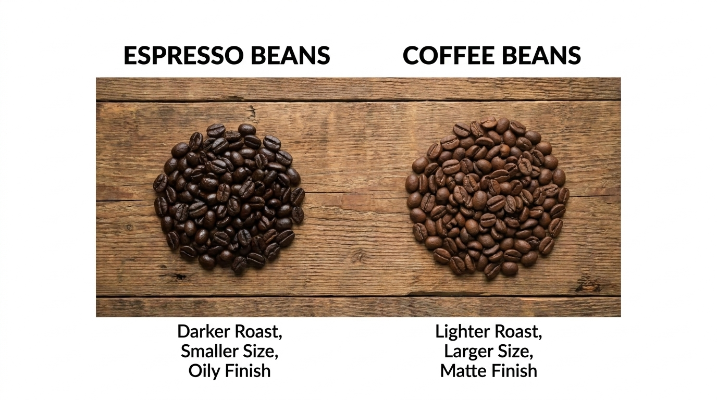
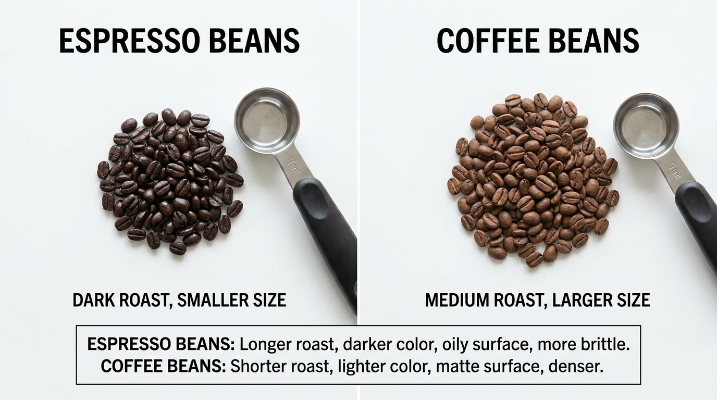
The roasting process for espresso beans typically involves a darker roast compared to traditional coffee beans. This results in a rich, bold flavor profile with a reduced acidity, making it ideal for extraction during the espresso brewing process. Whereas coffee beans can be roasted to highlight various flavor notes, espresso beans' darker roast enhances their body and resilience under pressure, leading to a distinctly powerful coffee experience.
Additionally, the grinding of espresso beans is executed to a specific consistency—usually finer than that of regular coffee. This fine grind is essential, as it increases the surface area for water extraction during brewing, allowing for a rapid and effective infusion of flavor and aroma. As hot water is forced through finely-ground espresso under high pressure, a concentrated flavor profile emerges, characterized by its rich, intense flavors and robust aroma. Through these distinct roasting and grinding processes, espresso beans develop concentrated flavor and aroma that set them apart from standard coffee beans.
Key Differences
Roast Profile
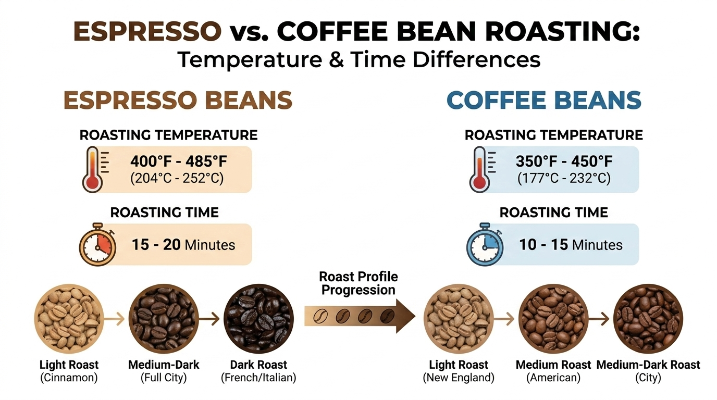
The most fundamental distinction between espresso and coffee beans lies in their roast profiles. Espresso beans are generally roasted darker than regular coffee beans, leading to enhanced oil presence and caramelization of sugar in the beans. The roasting duration for espresso typically lasts from 9 to 12 minutes, using higher temperatures (around 400-480°F or 200-250°C), resulting in a robust flavor. Conversely, coffee beans often undergo lighter roasting for longer periods (up to 15 minutes) at lower temperatures, preserving more of their natural acidity and fruity notes. This roasting difference affects the visual appearance of the beans while contributing to the distinctive tasting profiles of each brew.
Grind Size
Grind size plays a crucial role in brewing methods, particularly when comparing espresso and regular coffee. Espresso requires a fine grind, which maximizes extraction during the short brewing time—typically around 25-30 seconds. This fine consistency creates a rich crema and concentrates flavors, yielding a robust product. In contrast, regular coffee employs coarser grinds suitable for longer extraction methods, like drip brewing or French press. This variance in grind size significantly impacts the extraction process and the overall taste of the brewed coffee.
Brewing Method
The brewing techniques employed for espresso and coffee serve to further delineate their differences. Espresso is produced using an espresso machine that forces hot water through finely-ground coffee at high pressure, resulting in a concentrated shot. On the other hand, drip coffee makers work by allowing hot water to seep through coarsely ground coffee via a filter, producing a milder, larger volume drink. These contrasting methods yield significantly different textures and strengths in the final beverage.
Flavor Profiles
Flavor profiles starkly differ between espresso and regular coffee, contributing to their unique identities. Espresso tends to deliver rich, bold flavors—often with notes of dark chocolate, caramel, and balanced acidity—described as intense and full-bodied. On the flip side, regular coffee may exhibit a variety of flavors depending on the origin, ranging from fruity and floral to nutty or smoky. This variation allows for a lighter, more complex tasting experience, wherein the strength and concentration of espresso amplify its characteristics, while regular coffee's diversity enables exploration across different beans and roasts.
When to Use Espresso and Coffee Beans
When deciding between espresso and coffee beans, your choice significantly depends on the type of drink and the context. For rich, concentrated beverages like lattes and cappuccinos, espresso beans are the ideal choice, particularly in café settings where skilled baristas can showcase their craft. In contrast, for drip coffee or cold brews often enjoyed at home, regular coffee beans excel, providing a lighter flavor profile suited for leisurely mornings.
Espresso is superb for a quick pick-me-up during a hectic workday, while coffee beans are more suitable for social events where larger quantities of milder coffee are preferred. In essence, opt for espresso beans for intensity and craft, reserving regular coffee beans for brews emphasizing a broader spectrum of flavors—especially in casual homebrew scenarios.
Embrace Your Coffee Journey
This exploration of espresso beans versus coffee beans reveals their distinct characteristics, flavor profiles, and preparation methods. Whether you’re drawn to the rich crema of a flawlessly brewed espresso or the diverse flavors of different coffee beans, each has unique merits worthy of exploration. We encourage you to experiment with both types, exploring various brewing techniques to discover your personal preferences. Remember, coffee appreciation is a delightful journey—every cup offers an opportunity to learn, taste, and savor. By understanding the differences and engaging with each variety, you open yourself to an entire world of flavors and experiences. So grab your favorite brewing tool, try out an espresso roast, and take the time to enjoy every sip. Your coffee adventure awaits, because the journey is just as rewarding as the destination!
You May Like
-

-
Coffee
Is Frozen Coffee the Secret to Better Flavor and Freshness?
-
Coffee
Best Vanilla Syrup for Coffee (and Which Ones Are Actually Worth Buying)
-
Recipe
The Only 9 Coffee Drinks You Need To Master Before This Weekend
-
Recipe
Iced Caramel Macchiato: Recreate The Starbucks Taste For Under $1
-
Recipe
Dalgona Coffee (Whipped): The Viral Recipe Is Easier Than You Think